When Should You Start Brushing Babies’ Teeth?
Oral hygiene in babies should begin well before the first tooth erupts. Early routines familiarise the baby with cleaning and, by removing bacterial load from gums and tongue before eruption, help protect the very first teeth. Modern pediatric dentistry guidelines (AAPD, EAPD) recommend a controlled amount of fluoride toothpaste from the eruption of the first tooth and a first dental visit no later than the first birthday. A well-established routine prevents early childhood caries, supports healthy eruption of permanent teeth and helps the child build a positive relationship with the dentist. At Dent Alesta Dental Clinic in Izmir Cigli we provide parents with a step-by-step roadmap starting from birth.
Age-by-Age Care Guide
0–6 Months: Before Teeth
- Start: From birth.
- Goal: Keep the mouth clean, build the habit and stimulate the gums.
- Method: After feeds—especially the last night feed—wipe gums and tongue gently with a damp gauze or silicone finger brush.
- Important: No toothpaste is needed at this stage; water is sufficient.
6–12 Months: The First Tooth
- Start: As soon as the first tooth appears (average 6 months; range 4–10 months).
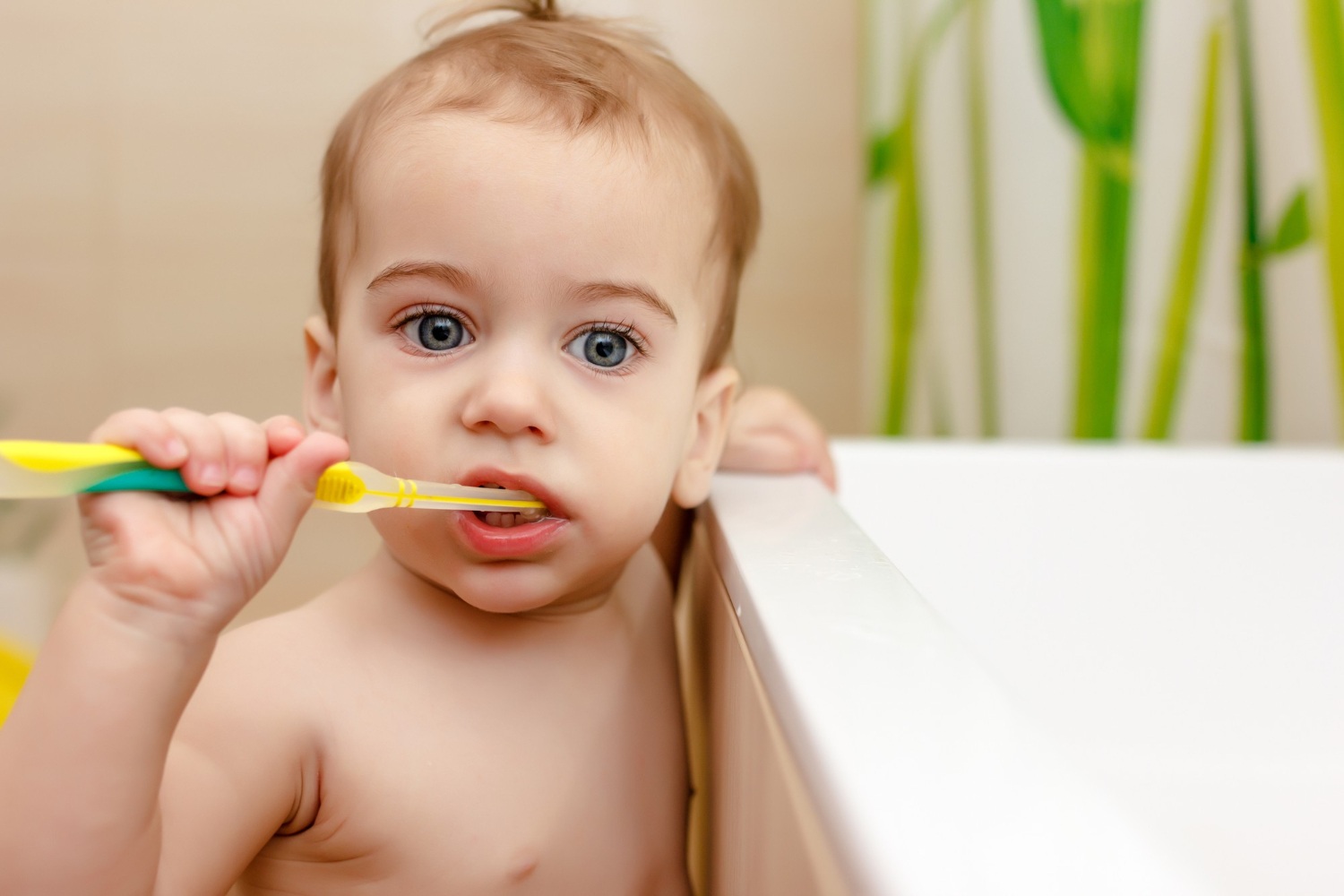
- Brush: A soft, small-headed baby toothbrush. A silicone finger brush may still be used during the transition.
- Toothpaste: A rice-grain sized smear (about 0.1 mL) of 1000 ppm fluoride children’s toothpaste.
- Frequency: Twice a day, morning and before bed.
1–2 Years: Building the Routine
- Brush: Designed for 1–2 year olds, small head, thick non-slip handle.
- Toothpaste: Still rice-grain sized (transition to pea-sized happens around age 3).
- Technique: Stand behind the child, support the head gently and brush with small circular motions. Let the child hold a second brush to imitate you.
- Duration: 1–2 minutes.
2–3 Years: Growing Independence
- Child’s role: The child may try to brush alone, but the parent must always brush again afterwards.
- Toothpaste: Approaching age 3, move to pea-sized (about 0.25 mL).
- Spitting: Teach the child to spit out toothpaste; do not rinse with lots of water afterwards, as a small residue of fluoride helps protect the enamel.
Age 3 and Beyond
- Toothpaste amount: Pea-sized 1000–1450 ppm fluoride paste.
- Frequency: Brush twice a day for two minutes each time.
- Parental role: Parents should brush or supervise closely until age 6–7, as motor skills reach the required level only around this age.
- Flossing: When primary molars start touching (usually 3–4 years), floss once a day.
Choosing the Right Toothbrush
Three rules stand out for baby and child brushes: small head, soft bristles, ergonomic handle.
- Silicone finger brush: Ideal from 0 to 12 months for cleaning gums and the very first teeth without irritation.
- Baby brush (6 months–2 years): Bristle head about half the size of an adult brush; thick, non-slip handle for the parent.
- Children’s brush (2–6 years): Colours, cartoon characters or musical models can spark interest, but soft bristles and a small head remain the priority.
- Electric brush: Can be used from age 3 with dentist approval; if the child tolerates the vibration, it removes plaque effectively.
- Replacement: Change the brush every 2–3 months or when the bristles splay.
Fluoride Use: Right Amount for Each Age
Fluoride is the single most effective agent for preventing decay in primary and permanent teeth. Amounts recommended by the European (EAPD) and American (AAPD) Academies of Paediatric Dentistry are:
- 0–6 months: No toothpaste.
- First tooth–age 3: Rice-grain smear (about 0.1 mL) of 1000 ppm fluoride paste.
- Age 3–6: Pea-sized (about 0.25 mL) 1000–1450 ppm fluoride paste.
- Age 6 and above: Adult paste 1450 ppm, pea-sized amount.
Fluoride-free pastes are now considered ineffective in caries prevention. Even if a child swallows the recommended amount, fluoride intake remains within safe limits; the real risk comes from uncontrolled, excessive amounts of paste.
Why Primary Tooth Decay Matters
Many parents underestimate cavities in primary teeth because they will be replaced. In reality, decay in baby teeth affects both current quality of life and the future of permanent teeth:
- Pain and infection: Untreated cavities may cause abscesses and swelling; sleep, feeding and school performance suffer.
- Nutritional issues: Pain leads the child to avoid harder foods, impacting growth.
- Speech development: Front primary teeth are involved in correct pronunciation; early loss may cause speech problems.
- Space maintenance: Primary teeth reserve space for the permanent teeth developing beneath them. Early loss can lead to crowding and future orthodontic treatment.
- Psychology: Early extractions or difficult treatments may cause dental anxiety later on.
When Is the First Dental Visit?
AAPD and the Turkish Society of Paediatric Dentistry both recommend a dental check-up within 6 months of the first tooth erupting or by the first birthday at the latest. The goals of this early visit are:
- Caries risk assessment and detection of early lesions.
- Parental coaching on brushing technique and fluoride use.
- Guidance on feeding, bottle and pacifier habits.
- A gentle, positive introduction to the dental setting.
- Application of fluoride varnish when indicated for extra protection.
At Dent Alesta Izmir Cigli, baby check-ups are planned in a family-friendly, short-visit format. To minimise anxiety, we usually avoid treatment at the first visit and focus on getting acquainted, examining the mouth and coaching the parents.
Common Mistakes
- Putting the baby to sleep with a bottle: Milk, juice or sweetened drinks left in the mouth overnight cause “baby-bottle” (early childhood) caries, often starting as brown spots on the upper front teeth.
- Sweetening a pacifier with honey or sugar: A well-meant but harmful habit that continuously exposes teeth to sugar.
- Postponing brushing: Waiting until age 2 or 3 because “they will fall out anyway” is a serious cause of caries.
- Using adult toothpaste: Adult pastes (1450–5000 ppm) are too strong for babies; use a children’s paste.
- Leaving brushing to the child: Before age 6 children lack the manual dexterity to brush effectively. Parental supervision is essential.
- Rinsing heavily with water: Rinsing thoroughly after brushing washes fluoride off the teeth; spitting is enough.
- Frequent sugary snacks and drinks: Continuous juice, biscuits and sweets throughout the day keep the teeth under constant acid attack.
Frequently Asked Questions
When should I start brushing my baby’s teeth?
Oral care can start from birth with a damp gauze or silicone finger brush. True brushing begins as soon as the first primary tooth erupts, usually around 6 months.
Should baby toothpaste contain fluoride?
Yes. Current guidelines recommend a rice-grain smear of 1000 ppm fluoride paste from the first tooth. Fluoride-free pastes are considered ineffective for caries prevention.
My baby swallows the toothpaste, is it dangerous?
When the correct amount (rice-grain size) is used, the fluoride swallowed remains within safe limits. It is important to keep the amount small until the child learns to spit around age 3.
At what age is the first dental visit?
Within 6 months of the first tooth erupting or by the first birthday at the latest. Early visits reduce caries risk and help the child build a positive bond with the dentist.
How harmful is sleeping with a bottle?
Very harmful. Saliva flow drops during sleep, so teeth are exposed to milk or juice sugars for long periods and caries develops rapidly. Babies should sleep after finishing the bottle; substituting water can help wean the habit.
My child refuses to brush, what should I do?
Turn brushing into play: sand timers, music, imitation games and colourful brushes help. Let the child hold their own brush, then brush again yourself. Routine and consistency work far better than force.
Do primary teeth need treatment if they decay?
Absolutely. Untreated decay in primary teeth causes pain, infection and crowding of permanent teeth. Primary teeth shed gradually between ages 6 and 12; keeping them healthy until then is critical for permanent teeth.
Paediatric Dental Care at Dent Alesta Izmir Cigli
At Dent Alesta Dental Clinic in Izmir Cigli Atasehir, we offer an examination experience designed specifically for babies and children. The first visit is focused on familiarising the child with the clinic, the chair, the mirror and brushing techniques in a playful way. We coach parents on preventing baby-bottle caries, using fluoride correctly and building healthy eating habits; when indicated we add fluoride varnish and fissure sealants for extra protection. For families coming from Menemen, Mavisehir, Karsiyaka, Bayrakli and Bostanli, appointments are planned in flexible time slots.
For more information on maintaining oral hygiene and preventing calculus build-up in children, see our dental cleaning and scaling page. For appointments, call +90 540 002 00 35 or fill out our online appointment form.