What Are Implant-Supported Prosthesis Types? (Fixed & Removable)
The long-term success of implant treatment depends not only on the implant itself but also on the correct selection of the prosthesis placed on top of it. Implants act as titanium-based artificial roots inserted into the jawbone; however, the element that truly restores chewing, speech and smile function is the prosthetic superstructure supported by these implants. Today, implant-supported prostheses are offered in a wide range of options depending on the number of missing teeth, bone volume, esthetic expectations and budget. According to international clinical data, appropriately planned implant-supported prostheses show a 10-year survival rate in the 90–95% range.
Implant-supported prostheses are grouped in two main categories: fixed prostheses (not removable by the patient) and removable prostheses (patient-removable for hygiene). Each group contains several subtypes, and each has clear advantages in different clinical scenarios. For a single missing tooth, a fixed single crown is often ideal; for a fully edentulous jaw, hybrid fixed prostheses that let patients leave the clinic with fixed teeth the same day, or locator-retained overdentures for patients seeking a more economical solution, may come to the fore. At Dent Alesta Dental Clinic in Izmir Cigli, the most suitable prosthesis type for each patient is determined through a detailed clinical exam and digital planning process.
1. Fixed Implant-Supported Prostheses (Most Comfortable)
Fixed restorations are screwed or cemented to implants. They cannot be removed by the patient and provide the most natural chewing sensation.
| Prosthesis Type | Indication | Material | Advantages |
|---|---|---|---|
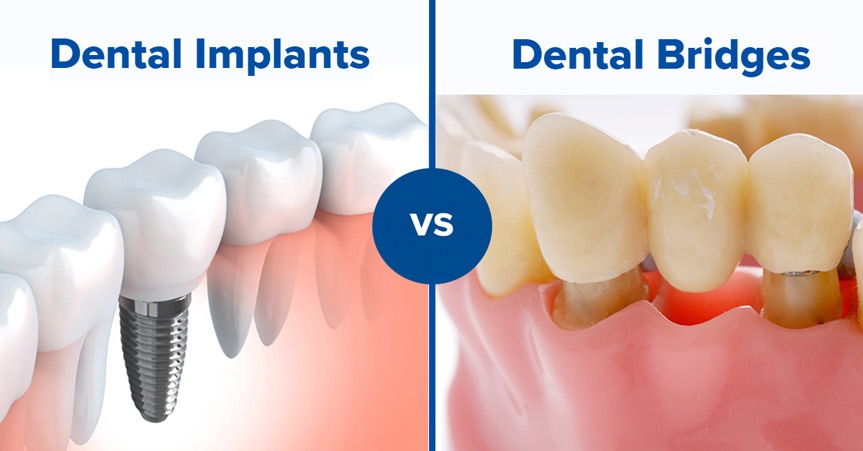
| Single Crown | Single missing tooth | Porcelain, Zirconia, All-ceramic | Function and esthetics close to a natural tooth |
| Implant-Supported Bridge | Multiple adjacent missing teeth | Zirconia, Metal-ceramic | Replaces spans using 2+ implants |
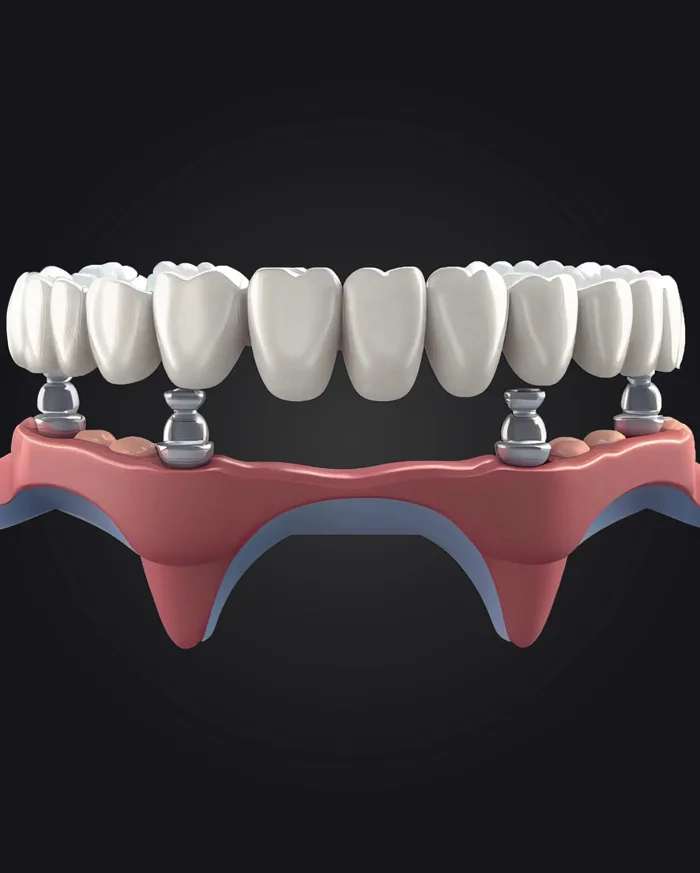
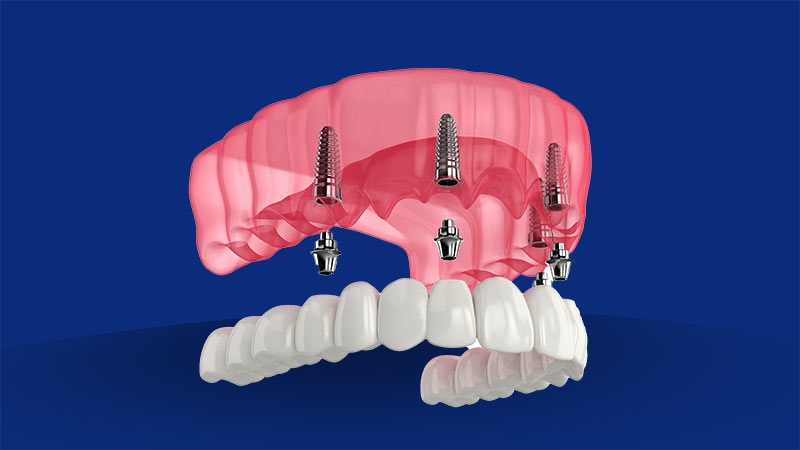
| Hybrid Prosthesis (All-on-Four/Six) | Fully edentulous arches | Acrylic/Composite on metal or zirconia framework | Full-arch fixed teeth with few implants; loads transferred to bone |
| Full-Arch Zirconia Bridge | Fully edentulous arches | Zirconia (layered with esthetic porcelain) | Highest esthetics; thinner than classic hybrids |
2. Removable Implant-Supported Prostheses (More Stable Dentures)
These are implant-retained yet removable for hygiene, solving looseness of conventional dentures.
| Prosthesis Type | Indication | Attachment | Advantages |
|---|---|---|---|
| Overdentures with Attachments (Locator/Bar) | Edentulous jaws (typically 2–4 implants) | Locator studs or bars with clips | Much more stable vs. conventional dentures; improved mastication; option for limited bone |
| Overdenture (Cover Denture) | Edentulous jaws | Bar or stud attachments | More economical than fixed; easy to remove for cleaning |
Fixed vs. Removable: A Detailed Comparison
One of the most common patient questions is how the difference between fixed and removable prostheses actually feels in daily life. The practical differences can be summarized as follows:
- Chewing force: Fixed prostheses can reach approximately 80–90% of the biting force of natural teeth, while removable implant-supported prostheses stay in the 50–70% range. Even so, removable implant designs are far stronger than conventional total dentures.
- Palatal coverage: Fixed prostheses leave the palate uncovered on the upper jaw, preserving taste and clear speech. In implant-retained overdentures, the palatal portion can be kept thin or fully removed compared with a classic total denture.
- Speech: With fixed prostheses, adaptation is generally completed within 1–2 weeks. With removable ones, temporary changes in saliva flow and tongue position may last 2–4 weeks.
- Esthetics: Zirconia-based fixed prostheses provide the closest appearance to natural teeth. Removable prostheses can restore ideal lip support in patients with significant bone loss thanks to the pink acrylic gingival simulation.
- Longevity: The main framework of fixed prostheses can last 15–20 years with proper care. Attachment parts of removable prostheses (especially locators) should be replaced every 1–3 years due to wear.
Who Is Fixed Better For, and Who Is Removable Better For?
Prosthesis selection is highly individual and should never be decided without professional guidance. In general clinical practice, the following profiles are considered:
Ideal Candidates for Fixed Prostheses
- Patients with adequate jawbone volume (or those in whom volume can be increased with grafting).
- Patients seeking the closest possible feel and esthetics to natural teeth.
- People able to spend time on daily oral hygiene and use interdental brushes.
- Patients whose general health allows surgical procedures (no uncontrolled diabetes, severe osteoporosis, etc.).
- Patients whose budget accommodates fixed prosthesis costs.
Ideal Candidates for Removable Prostheses
- Patients with advanced bone resorption who prefer to avoid grafting or minimize surgery.
- Older patients with limited manual dexterity who may struggle with interproximal cleaning of a fixed prosthesis.
- Patients with budget constraints seeking a more stable solution than a conventional total denture.
- People who find a daily remove-and-clean routine more convenient.
- Cases with pronounced bone loss where lip and cheek support needs to be provided by an acrylic gingiva.
Long-Term Outcomes and Success Rates
The long-term success of implant-supported prostheses depends on the performance of both the implant and the superstructure. General findings from the clinical literature can be summarized as:
- 10-year implant survival: Typically reported in the 92–97% range. There is no significant difference in implant retention between fixed and removable superstructures.
- Prosthetic complications: Removable prostheses more commonly show attachment wear and acrylic fracture; fixed prostheses can present porcelain chipping or screw loosening.
- Peri-implantitis risk: Depends on hygiene. Poor interproximal cleaning around fixed prostheses may raise risk. Removable prostheses can offer a hygiene advantage in some patients since they can be taken out.
- Bone preservation: Both prosthesis types significantly slow bone resorption compared with conventional total dentures thanks to the presence of implants.
Maintenance and Cleaning Comparison
Once a prosthesis type is selected, a correct maintenance routine can effectively double the lifespan of the superstructure. Recommended care includes:
Fixed Prosthesis Care
- Brushing at least twice a day with a soft-bristle toothbrush.
- Interdental brushes and superfloss for spaces between implants.
- A water flosser is particularly helpful for full-arch fixed prostheses to control biofilm.
- Professional peri-implant maintenance every 6 months.
Removable Prosthesis Care
- The prosthesis is taken out daily and cleaned with a denture brush and mild liquid soap; abrasive toothpaste is not recommended.
- Deep disinfection with effervescent denture tablets 2–3 times a week.
- Do not let the prosthesis dry out overnight; drying can cause distortion.
- Implant abutments in the mouth should also be cleaned with a soft brush.
- Retention parts such as locator inserts should be checked every 12–18 months and replaced when worn.
Cost Differences and Budget Planning
Implant-supported prosthesis costs depend on many variables: implant brand, superstructure material, number of implants and laboratory workload. In general:
- Removable implant-retained prostheses (2 implants + locators): Usually offer a lower starting cost than full-arch fixed prostheses.
- Fixed hybrid prostheses (All-on-Four/Six): Moderate cost; save total treatment time by providing same-day fixed teeth.
- Full-arch zirconia fixed bridges: Offer the highest esthetics and durability, with a correspondingly higher investment.
- Long-term cost: Removable prostheses require ongoing costs such as attachment renewal and acrylic repair. Fixed prostheses have a higher initial investment but lower annual maintenance cost.
Exact pricing is determined individually after clinical examination, radiographic evaluation and treatment planning.
Adaptation Period and Quality of Life
One of the most frequent patient concerns is how quickly they can return to normal life after the prosthesis is placed. Clinical observations show that:
- Adaptation to fixed prostheses: Chewing and speech usually normalize within 1–2 weeks. Since the sensation is close to natural teeth, psychological adaptation is fast.
- Adaptation to removable prostheses: Increased saliva, mild pressure sensation and temporary speech differences are normal in the first days and largely settle within 2–4 weeks.
- Eating experience: Fixed prostheses generally allow unrestricted eating of firmer foods like apples and steak. With removable options, care is advised with very hard or sticky foods.
- Social confidence: Both types significantly improve smile confidence versus classic total dentures; however, fixed prostheses fully eliminate the "will my denture fall out?" worry.
Factors Determining the Choice
- Bone: Very limited volume may favor removable options to reduce surgery.
- Budget: Fixed options usually cost more.
- Hygiene: Removable designs can simplify cleaning.
- Esthetics: Fixed zirconia-based solutions often meet the highest esthetic demands.
- Age and dexterity: Removable prostheses may be easier to clean for patients with limited manual dexterity.
- General health: Systemic conditions can affect the surgical approach and number of implants.
Frequently Asked Questions
Which is better, a fixed or a removable implant-supported prosthesis?
Fixed prostheses generally offer stronger biting force and a more natural feel; removable prostheses are more economical and require less surgery. The best choice depends on bone status, budget, hygiene habits and personal expectations.
Can a removable implant prosthesis fall out?
Unlike a classic total denture, it attaches to implants via locator or bar attachments and does not dislodge during normal chewing. It can be easily removed by the patient for cleaning.
How many implants are needed for a full-arch fixed prosthesis?
Depending on bone status, 4–6 implants are typically preferred in the lower jaw and 6–8 in the upper jaw. Techniques such as All-on-Four allow a full-arch fixed prosthesis with only 4 implants.
How long does an implant-supported prosthesis last?
With proper care and regular check-ups, the main framework of a fixed prosthesis can last 15–20 years, while the attachment parts of removable prostheses may need renewal every 1–3 years. The implants themselves can last far longer under favorable conditions.
Can I eat everything with a fixed prosthesis?
Generally yes. Thanks to near-natural force transmission, hard foods such as meat and apples can be consumed comfortably. Extreme loads such as chewing ice or cracking hard-shelled nuts should still be avoided.
Should removable prostheses be removed while sleeping?
To let the soft tissues rest and support peri-implant hygiene, it is often recommended to take the prosthesis out at night and store it in a clean, moist container. The exact routine should follow your dentist’s advice.
Can I switch from a fixed to a removable prosthesis or vice versa later?
When bone and implant conditions allow, the superstructure can be changed. For example, a patient who has used a removable overdenture for many years may transition to a fixed system with additional implants.
Implant-Supported Prosthesis Treatment at Dent Alesta Izmir Cigli
At Dent Alesta Dental Clinic in Izmir Cigli Atasehir, we plan implant-supported fixed and removable prosthesis treatments across a wide spectrum — from single tooth loss to fully edentulous jaws. After a personalized clinical exam, CBCT evaluation and mock-up planning, options such as single crowns, implant bridges, hybrid fixed prostheses and locator-supported overdentures are presented on a comparative basis. For patients coming from Menemen, Mavisehir, Karsiyaka, Bayrakli and Bostanli, treatment and follow-up appointments are scheduled in flexible time slots.
For detailed information about the implant treatment process, please see our dental implants page or visit our implant-supported prosthetics page. To book a free consultation and treatment planning appointment for the most suitable prosthesis type, call us at +90 540 002 00 35 or fill out our online appointment form.