Teeth Whitening Methods: At-Home and In-Office
Tooth discoloration is inevitable due to aging, coffee, tea, red wine, tobacco use, and some medications. Whitening (bleaching) safely removes these stains to help you achieve a younger, more aesthetic smile.
1. In-Office Whitening
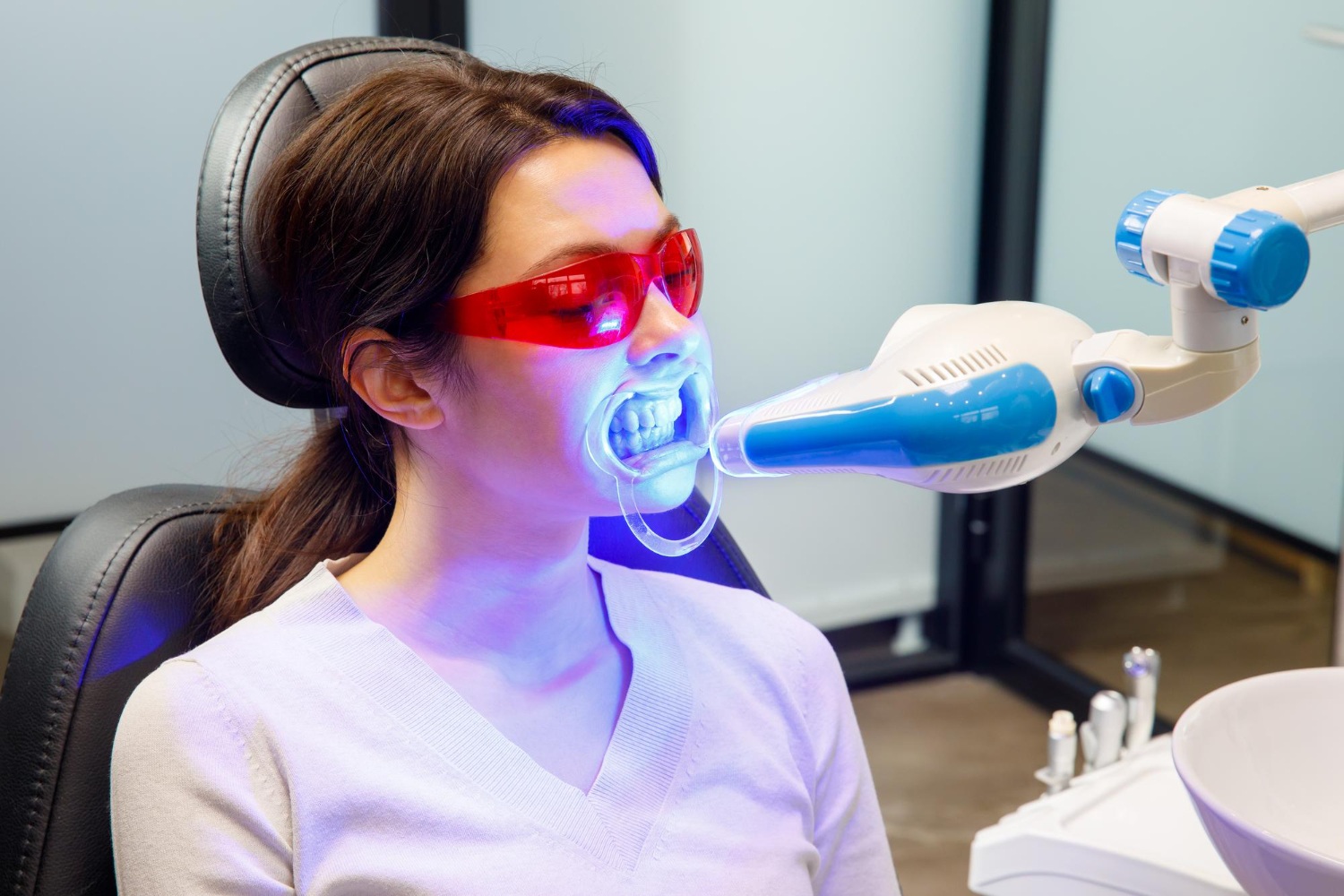
This method is performed in a dental clinic under professional supervision, typically in a single session, and is the fastest and most effective approach.
- How It’s Done: Gums are isolated with a protective barrier gel. A high-concentration (about 25–40%) hydrogen peroxide or carbamide peroxide gel is applied to the front tooth surfaces.
- Activation: The gel is activated with UV light, LED (blue light), or laser to accelerate the reaction and initiate whitening.
- Advantages:
- Rapid Results: Usually visible within a single session (about 45–60 minutes).
- Safety: Performed under a dentist’s control to protect enamel and gums.
- Disadvantages:
- More costly than at-home whitening.
- Temporary sensitivity may occur during or after the procedure.
2. At-Home Whitening (Dentist-Supervised)
Custom clear trays are fabricated after impressions taken by the dentist.
- How It’s Done: The patient places a low-concentration (about 10–20%) gel in the trays and wears them at night or for set hours during the day.
- Course: Takes 1–2 weeks depending on the target shade.
- Advantages:
- Lower sensitivity risk.
- More cost-effective than in-office whitening.
- Trays can be reused later for touch-ups.
- Disadvantages:
- Requires patient compliance and takes longer to see results.
3. Combined Whitening
Starting with in-office whitening and reinforcing with at-home trays is the most commonly preferred approach and often yields the most durable results.
Good to Know
- Longevity: Results typically last 1–3 years depending on hygiene, diet, and habits (e.g., smoking, coffee).
- Fillings and Crowns: Whitening does not change the color of existing restorations; if shade mismatch occurs, restorations may need replacement after whitening.
- Sensitivity: Usually temporary and manageable with dentist-recommended products.