What Are Implant-Supported Prosthesis Types? (Fixed & Removable)
Implants act as artificial roots. On top of them, various prostheses—often more comfortable and functional than conventional dentures—can be made. These are grouped as fixed (not removable by the patient) and removable (patient-removable).
1. Fixed Implant-Supported Prostheses (Most Comfortable)
Fixed restorations are screwed or cemented to implants. They cannot be removed by the patient and provide the most natural chewing sensation.
| Prosthesis Type | Indication | Material | Advantages |
|---|---|---|---|
| Single Crown | Single missing tooth | Porcelain, Zirconia, All-ceramic | Function and esthetics close to a natural tooth |
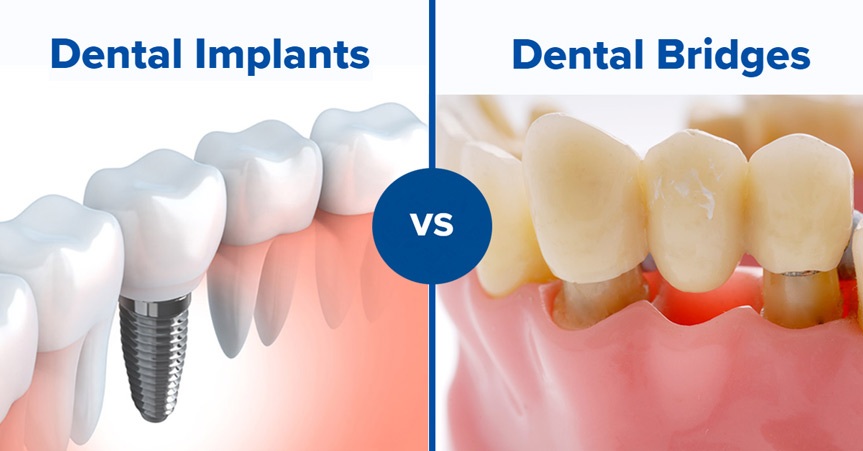
| Implant-Supported Bridge | Multiple adjacent missing teeth | Zirconia, Metal-ceramic | Replaces spans using 2+ implants |
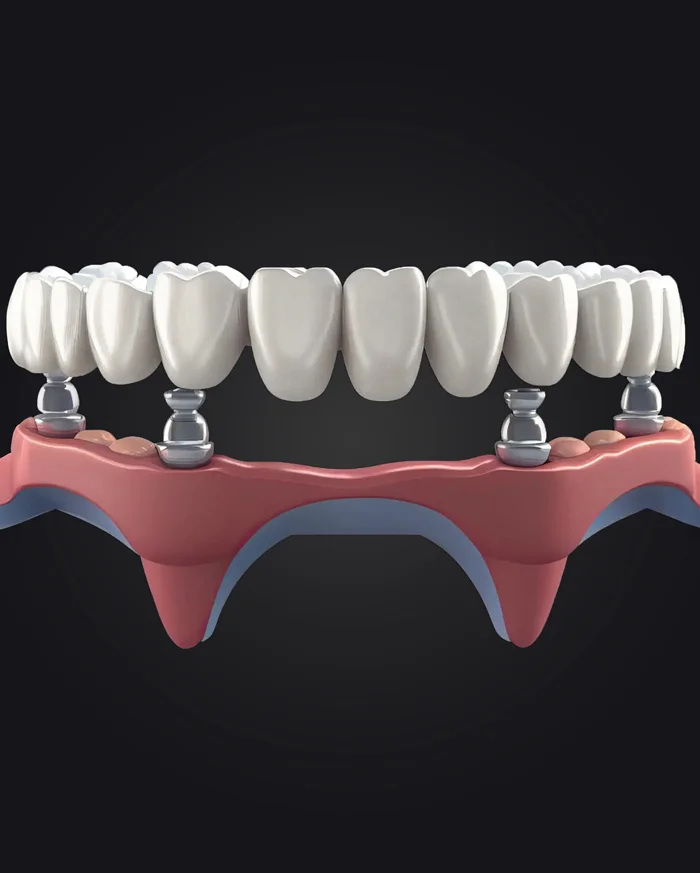
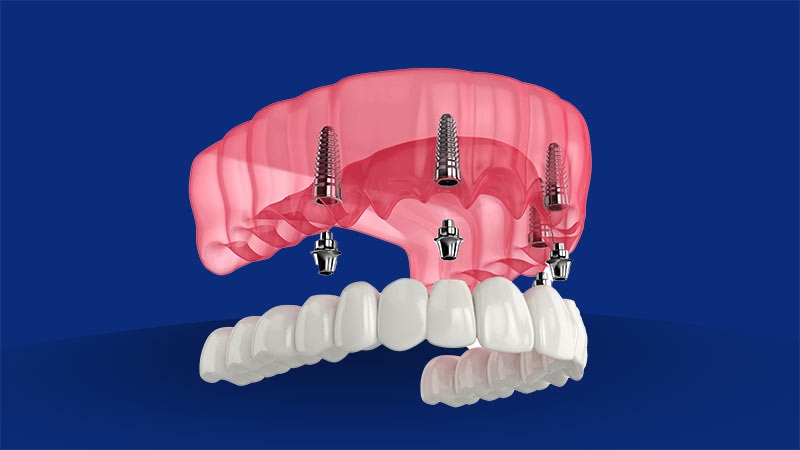
| Hybrid Prosthesis (All-on-Four/Six) | Fully edentulous arches | Acrylic/Composite on metal or zirconia framework | Full-arch fixed teeth with few implants; loads transferred to bone |
| Full-Arch Zirconia Bridge | Fully edentulous arches | Zirconia (layered with esthetic porcelain) | Highest esthetics; thinner than classic hybrids |
2. Removable Implant-Supported Prostheses (More Stable Dentures)
These are implant-retained yet removable for hygiene, solving looseness of conventional dentures.
| Prosthesis Type | Indication | Attachment | Advantages |
|---|---|---|---|
| Overdentures with Attachments (Locator/Bar) | Edentulous jaws (typically 2–4 implants) | Locator studs or bars with clips | Much more stable vs. conventional dentures; improved mastication; option for limited bone |
| Overdenture (Cover Denture) | Edentulous jaws | Bar or stud attachments | More economical than fixed; easy to remove for cleaning |
Factors Determining the Choice
- Bone: Very limited volume may favor removable options to reduce surgery.
- Budget: Fixed options usually cost more.
- Hygiene: Removable designs can simplify cleaning.
- Esthetics: Fixed zirconia-based solutions often meet the highest esthetic demands.