Orthodontics: Are Clear Aligners or Braces Better?
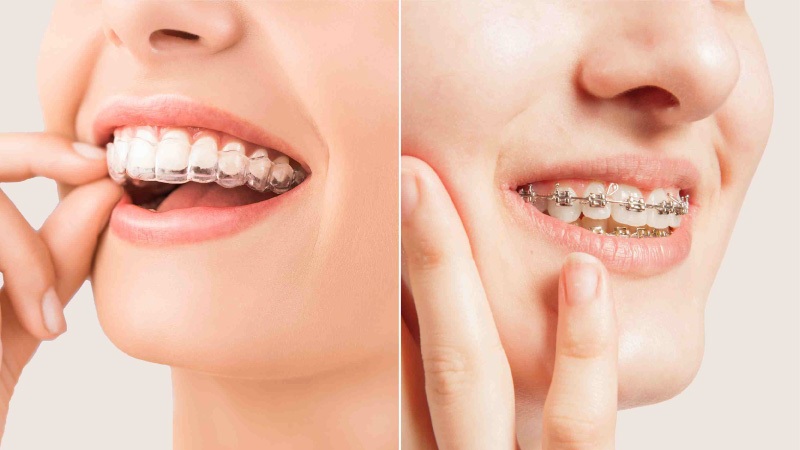
Orthodontic therapy corrects crowding, spacing, and malocclusion. Two main options exist today—traditional braces and clear aligners. The best choice depends on patient needs, case complexity, and lifestyle.
Comparison Table
| Feature | Braces | Clear Aligners |
|---|---|---|
| Visibility/Esthetics | More visible (metal/ceramic/lingual options) | Nearly invisible; highly esthetic |
| Removability | Fixed; cannot be removed by the patient | Removable for eating/cleaning |
| Hygiene | More challenging; special brushes/floss may be needed | Easier because trays are removed |
| Case Complexity | Treats even very complex cases | Best for mild–moderate cases (capabilities improving) |
| Comfort | Metal parts may irritate soft tissues | Smooth plastic; generally more comfortable |
| Treatment Time | Can sometimes progress faster with stronger forces | Requires disciplined wear (20–22 hours/day) |
| Cost | Often more economical | Often more expensive |
When Are Aligners Preferable?
- Esthetics first: Patients who prefer minimal visibility
- Hygiene ease: Simpler brushing/flossing routine
- Mild–moderate cases: Without major skeletal discrepancies
When Are Braces Preferable?
- Complex cases: Significant root movement/occlusal corrections
- Compliance concerns: For those unlikely to wear trays consistently
- Budget: Wider cost range
Conclusion
Outcomes rely more on diagnosis and planning than on the appliance itself. Decide after a comprehensive orthodontic evaluation.